
Introduction
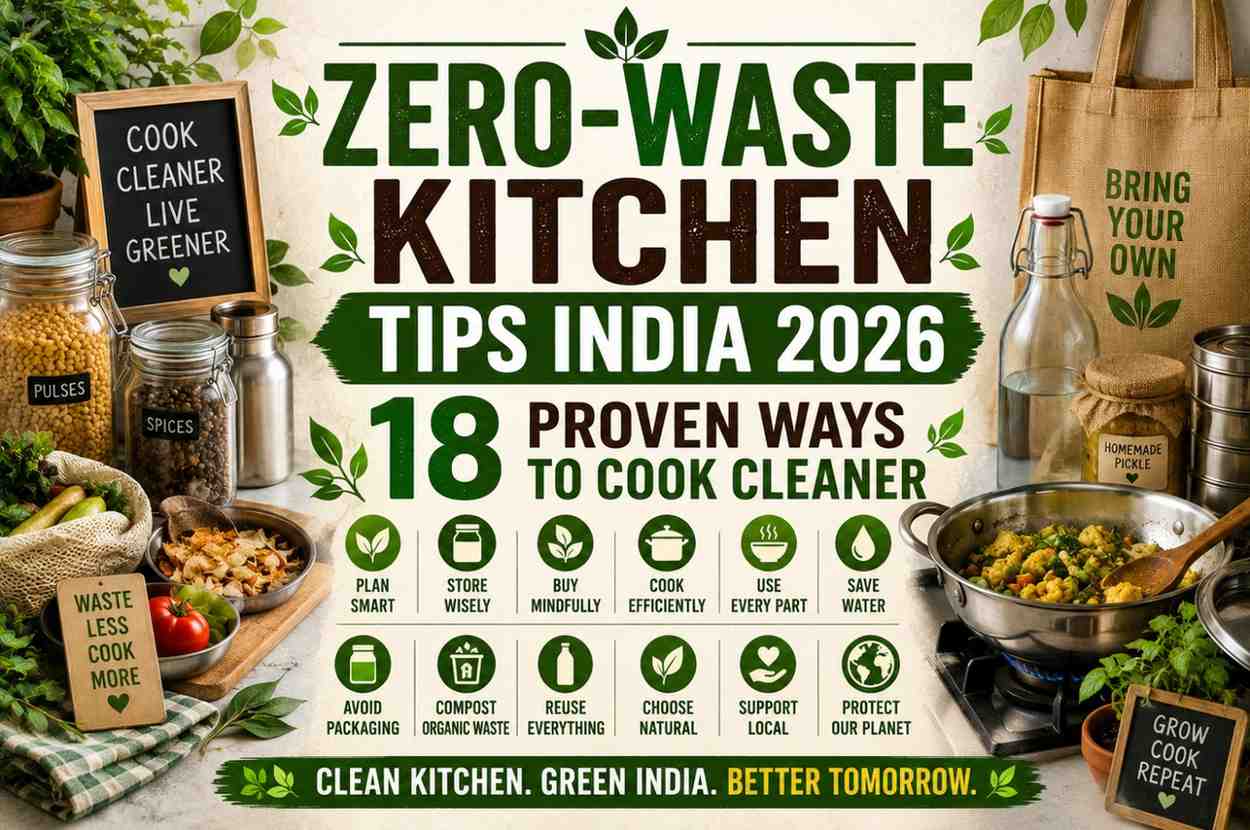
The kitchen is the heart of every Indian home — and, unfortunately, one of the biggest sources of household waste. Between plastic packaging from groceries, vegetable peels, leftover food, and single-use containers, the average Indian kitchen generates significant waste every single day. But with the right habits and tools, your kitchen can become a near-zero waste space. These zero-waste kitchen tips for India 2026 will help you get there—practically, affordably, and without sacrificing the joy of Indian cooking.
Zero-waste kitchen tips in India in 2026 are not about perfection. They are about consistent, deliberate choices that reduce your household’s environmental impact while often cutting your grocery and utility bills significantly. India’s culinary traditions—dal cooked from scratch, chutneys made from peels, and yogurt set at home—are already deeply aligned with zero-waste principles. This guide helps you reconnect with those traditions while adding modern tools and strategies.
Understanding the Indian Kitchen Waste Problem
India wastes approximately 67 million tonnes of food every year — enough to feed hundreds of millions of people. A large proportion of this waste originates in households, not restaurants or factories. Common culprits include the following:
- Vegetables bought in excess and left to rot
- Cooked food that is not repurposed into subsequent meals
- Single-use plastic bags, wrappings, and sachets
- Plastic water bottles and beverage packaging
- Excessive food packaging from processed and branded products
The good news: most of these problems have elegant, low-cost Indian solutions.
Zero Waste Kitchen Tips India 2026: The Complete Guide
🛒 Shopping Smart
1. Shop at the local sabzi mandi.
Your neighborhood vegetable market is inherently less wasteful than a supermarket. There is minimal packaging, you can bring your own bag, and buying exactly the quantity you need prevents overbuying. Produce is also typically fresher, cheaper, and travels a shorter distance—all sustainability wins.
2. Bring Your Own Containers
For dal, flour, rice, spices, and dry goods, bring your own steel dabbas or cloth bags to kirana stores and bulk dry goods shops. Many traditional stores are happy to weigh directly into your container. This single habit eliminates dozens of plastic bags and packets per month.
3. Make a Weekly Meal Plan
Before you shop, plan your meals for the week. Know exactly what you will cook and buy only what you need. Meal planning is the single most effective way to reduce food waste—and it saves money. Studies consistently show that planned households waste 30–40% less food than unplanned ones.
4. Adopt the “First In, First Out” Rule
In your refrigerator and pantry, always move older items to the front and newer purchases to the back. This simple habit ensures older food is used first and nothing is forgotten at the back of the shelf until it spoils.
🍳 Cooking Without Waste
5. Use the Whole Vegetable
Indian cooking already has wisdom here—curry leaves, coriander stems, onion skins, and watermelon rind are all edible and flavorful. Go further:
- Vegetable peels → deep-fried crispy snacks or added to stock
- Stale roti → thepla, crumbled into upma, or made into choorma
- Overripe bananas → banana bread, smoothies, or halwa
- Rice water (kanji) → nourishing drink or hair rinse
6. Master the Art of “Fridge Clearing” Meals
Once or twice a week, cook a meal that uses up whatever vegetables, grains, or leftovers are near their end. Khichdi, poha, pulao, and mixed vegetable sabzis are ideal formats for this. These are not “leftover” meals—they are often the most creative and flavorful.
7. Preserve Seasonal Produce
When mangoes, tomatoes, green chilies, or lemons are in season and cheap, preserve them. Make pickles (achar), chutneys, and jams. Dry vegetables in the sun. This extends the life of seasonal produce for months and eliminates the need for out-of-season, heavily packaged alternatives.
8. Cook in Batches
Cooking a large pot of dal, rice, or rajma at once and refrigerating portions reduces energy consumption (fewer gas or electric burner cycles) and reduces the likelihood of ordering packaged food impulsively.
9. Make Your Own Stock
Collect vegetable trimmings, onion skins, ginger-garlic skins, and herb stems in a container in the fridge throughout the week. On the weekend, simmer them with water for 30–45 minutes to make a flavorful vegetable stock. Use this as a base for soups, gravies, and rice dishes. Zero waste, zero cost.
📦 Eliminating Packaging Waste
10. Switch to Refillable Cleaning Products
Brands like Bare Necessities (Bengaluru) offer concentrated, refillable cleaning products—dishwash, floor cleaner, and surface spray—in packaging designed to be reused. You bring your bottle back; they refill it. This eliminates the steady stream of single-use plastic cleaning bottles from your home.
11. Make Your Own Dishwash Paste
A simple, effective dishwash paste can be made from washing soda, castile soap, and a few drops of lemon essential oil. It cleans as well as commercial products, costs a fraction of the price, and comes in zero plastic packaging. A batch lasts weeks.
12. Replace Cling Film With Beeswax or Cloth Covers
Cling film (plastic wrap) is one of the hardest plastics to recycle. Replace it with beeswax wraps (available from Indian brands like Preserve and Beco), silicone lids, or traditional cloth covers (a practice many Indian grandmothers still follow).
13. Use a Steel or Clay Water Bottle
Keep a stainless steel bottle at home, in your bag, and at your desk. Avoid buying plastic-bottled beverages whenever possible. India’s tap water quality is improving in many cities, and a good filter makes it safe to drink.
14. Buy Concentrated Products
Many cleaning and personal care products are now available in concentrated form—you dilute them at home. This dramatically reduces the volume of packaging consumed per use. Look for concentrated dish soap, shampoo bars, and detergent tablets.
🌱 Managing Kitchen Waste
15. Start Composting
This is the most impactful zero-waste kitchen tip of all. Vegetable peels, fruit scraps, coffee grounds, tea leaves, and cooked food can all be composted. In 30 days, you can have rich, usable soil amendment from what would otherwise fill a landfill. Read our full guide: Composting at Home for Beginners India.
16. Segregate Waste at Source
India’s Swachh Bharat Mission mandates wet/dry waste segregation. Follow it. Keep separate bins for wet waste (food scraps going to compost), dry waste (paper, cardboard, glass, and metal), and hazardous waste (batteries and electronics). This enables proper recycling and reduces landfill burden.
17. Donate Excess Food
If you have cooked more than you can eat, do not throw it away. Platforms like No Food Waste (Chennai) and Feeding India connect households with organizations that redistribute edible surplus food to those in need.
18. Repurpose Glass Jars
Instead of recycling or throwing away glass jars from pickles, jam, or sauces, clean and reuse them for storage. They are airtight, durable, non-toxic, and — once you have enough — eliminate the need to buy any plastic storage containers.
The Zero Waste Indian Kitchen Starter Kit
To implement zero-waste kitchen tips India 2026 recommends, start with these essentials—most of which you probably already own:
| Item | Purpose | Cost |
|---|---|---|
| Jute or cotton shopping bag | Plastic bag replacement | ₹30–₹80 |
| 3–4 steel dabbas (varying sizes) | Food storage | ₹150–₹400 |
| Clay or steel water bottle | Bottled water replacement | ₹200–₹800 |
| Small compost bin or pot | Food scrap composting | ₹0–₹400 |
| Beeswax wraps (2–3) | Cling film replacement | ₹300–₹600 |
| Cloth produce bags | Fruit and vegetable storage | ₹80–₹200 |
Total investment: approximately ₹760–₹2,480. This is a one-time cost that eliminates thousands of rupees of recurring packaging purchases annually.
Zero Waste Cooking Is Indian Cooking
Here is the honest truth: zero-waste kitchen tips. India 2026 promotions are largely a return to how Indian kitchens have always functioned. Grandmothers made stock from scraps. Every part of the vegetable was used. Steel and clay were the default materials. Seasonal eating was not a trend — it was simply how one ate.
The zero-waste kitchen is not a foreign import. It is our culinary heritage, updated with modern awareness and tools. By following these practices, you connect with India’s most sustainable food traditions while significantly reducing your environmental impact.
For further reading on sustainable food systems and global zero-waste practices, Zero Waste International Alliance (rel=”dofollow”) is an excellent resource.
Related reading: Composting at Home for Beginners India | Best Eco-Friendly Products for Home India 2026 | Plant-Based Diet Benefits Environment 2026


 creator@ecometric.site