
Introduction
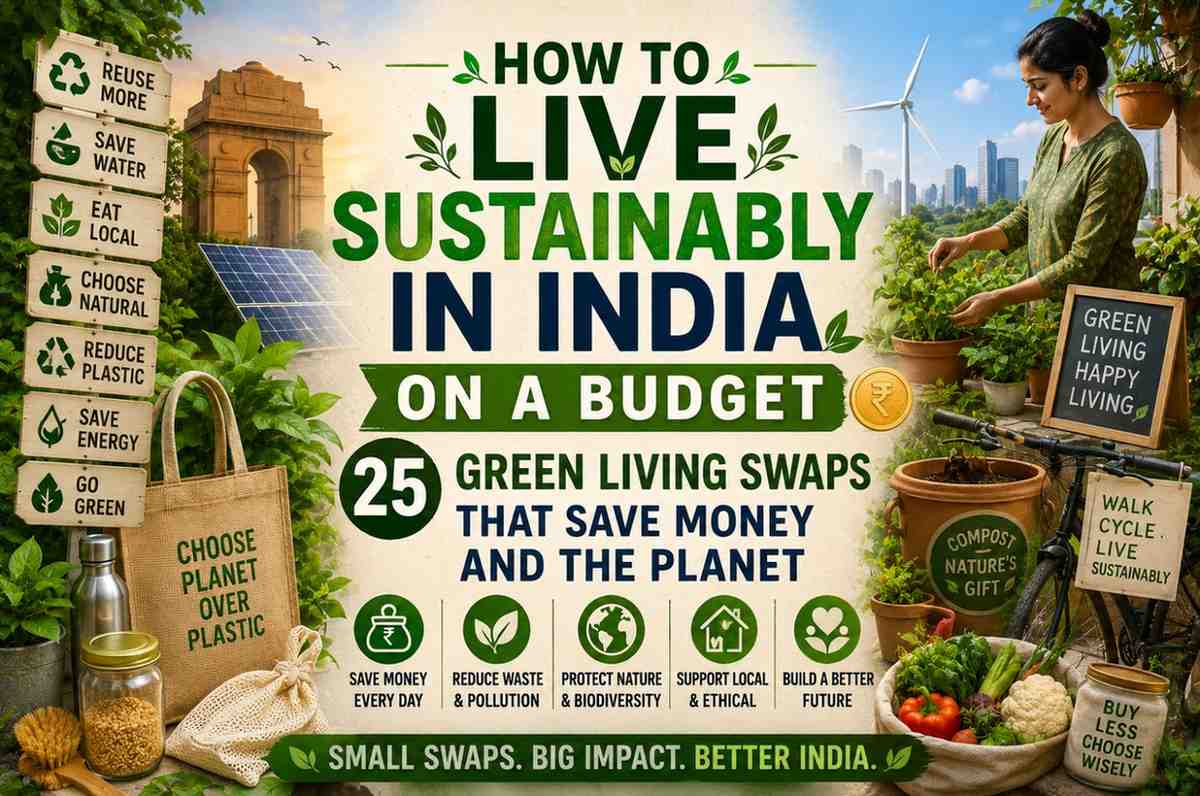
Learning how to live sustainably in India on a budget is not only possible—it’s one of the smartest financial decisions you can make in 2026. Many eco-friendly habits cost less than conventional ones, and this guide gives you 25 practical swaps that are kind to both your wallet and the Earth.
India is at a remarkable crossroads. With a population of over 1.4 billion people and rapidly growing urban centers, the environmental choices made by Indian households today will shape the planet’s future for generations. The good news? You don’t need to be rich to go green. In fact, how to live sustainably in India on a budget is a question millions of Indians are already answering through tradition, creativity, and common sense.
Our grandparents lived sustainably without even calling it that — they reused vessels, composted kitchen scraps, wore cotton, bought local, and wasted nothing. This guide revives those roots and combines them with modern, affordable eco-practices to give you a complete green living playbook.
Why Sustainable Living in India Makes Financial Sense
Before diving into the 25 swaps, let’s be clear: sustainability and savings go hand in hand. When you stop buying single-use plastics, you spend less on packaging. When you switch to energy-efficient appliances, your electricity bill drops. When you grow even a small kitchen garden, you save on vegetables weekly.
According to the The Energy and Resources Institute (TERI), sustainable lifestyle changes at the household level can reduce monthly expenditure by 15–30% over time, while simultaneously cutting carbon emissions. This is the double benefit that makes how to live sustainably in India on a budget such a powerful concept for 2026 and beyond.
25 Green Living Swaps to Start Today
1. Replace Plastic Carry Bags With Jute or Cloth Bags
A sturdy jute bag costs ₹30–₹80 and lasts years. A plastic bag costs ₹5 per use and contributes to India’s massive plastic pollution crisis. The math is simple.
2. Switch to a Bamboo Toothbrush
Available on Flipkart and Amazon India for ₹60–₹120, bamboo toothbrushes are biodegradable and work just as well as plastic ones. This is one of the easiest swaps in how to live sustainably in India on a budget.
3. Use Steel or Copper Water Bottles
A good quality steel bottle costs ₹200–₹500 and eliminates the need for packaged water. Copper vessels, long favoured in Indian tradition, offer additional health benefits and cost ₹300–₹800.
4. Install LED Bulbs Throughout Your Home
LED bulbs use up to 80% less electricity than incandescent bulbs. An LED costs ₹50–₹100 but saves thousands in electricity bills over its 15,000-hour lifespan.
5. Start Composting Kitchen Waste
A simple clay pot or plastic bucket can become a compost bin. Turn your kitchen scraps into rich manure for your balcony garden — completely free fertiliser in 30–45 days.
💡 Budget Tip: Start composting with a ₹200 matka (clay pot) from your local market. You’ll never need to buy fertiliser again if you have a kitchen garden.
6. Buy Seasonal and Local Produce
Seasonal vegetables from your local sabzi mandi are cheaper than supermarket imports, fresher, and carry a far lower carbon footprint. Shopping locally is the heartbeat of how to live sustainably in India on a budget.
7. Switch to Bar Soap and Shampoo Bars
Liquid soaps and shampoos come in plastic bottles that rarely get recycled. Shampoo bars and traditional soap cakes cost less per use, last longer, and generate zero plastic waste.
8. Use Cloth Napkins Instead of Paper Tissues
Cut up old cotton sarees or dupattas into napkins. They’re free, washable, and eliminate the need for paper tissue — saving money and trees simultaneously.
9. Hang-Dry Your Laundry
India has abundant sunshine. Skip the dryer and hang clothes on the line or rooftop — zero electricity cost, and your clothes last longer without the heat damage.
10. Fix Before You Replace
India has a brilliant culture of repair — cobblers, tailors, electronics repair shops on every street. Choose repair over replacement. It’s always cheaper and always greener.
11. Reduce Meat Consumption
Meat production is resource-intensive. Replacing meat even two to three days a week with dal, paneer, or legumes is cheaper, healthier, and dramatically reduces your personal carbon footprint.
12. Use Public Transport or Cycle Where Possible
Metro, bus, and cycling not only cost a fraction of running a personal vehicle but also reduce fuel emissions significantly. In cities like Delhi, Bengaluru, and Pune, public transport networks are expanding rapidly.
13. Switch to an Energy-Efficient Pressure Cooker or Induction Stove
Pressure cookers cut cooking time by 70%, using far less LPG. Induction stoves are 90% energy-efficient compared to gas flames at around 40%.
💡 Did You Know: Switching from gas to induction cooking can reduce your monthly fuel costs by ₹200–₹400 depending on family size.
14. Collect and Reuse Grey Water
Water used for washing vegetables, rinsing rice, or boiling pasta can be reused for watering plants. In water-scarce cities, this practice is both eco-conscious and vital.
15. Plant a Balcony or Terrace Garden
Herbs like tulsi, pudina, and coriander grow easily in pots. A small balcony garden provides fresh produce, improves air quality, and reduces grocery bills every single week.
16. Buy Second-Hand Clothes and Books
Sarojini Nagar in Delhi, Linking Road in Mumbai, or online platforms like OLX and Merapurana offer quality second-hand goods at a fraction of the cost — and extend the life of products already made.
17. Avoid Fast Fashion — Wear Cotton and Khadi
Khadi is one of India’s most sustainable fabrics. It’s handspun, biodegradable, and promotes rural livelihoods. Supporting khadi is one of the most culturally aligned ways to live sustainably in India.
18. Use Menstrual Cups or Cloth Pads
A menstrual cup costs ₹300–₹600 and lasts up to 10 years. Over a lifetime, this replaces thousands of disposable pads — massive savings and massive plastic reduction.
19. Reduce Food Waste With Weekly Meal Planning
Plan meals before your weekly grocery run. Buy only what you need. Cook in quantities that match your household. In India, food waste is estimated at 68.8 million tonnes per year — planning is one of the most powerful interventions available.
20. Switch to Solar for Water Heating
Solar water heaters are widely available in India at ₹8,000–₹25,000. They typically pay back their cost within 2–3 years through electricity savings and last 15–20 years.
21. Use Natural Cleaning Products
Baking soda, white vinegar, and lemon clean almost everything a chemical cleaner can — at a fraction of the cost and without toxic residues entering your waterways.
22. Donate Rather Than Discard
Clothes, toys, furniture, and books that you no longer need can find second lives through Goonj, local NGOs, or community donation drives. This is circular economy in action.
23. Choose Reusable Containers for Takeaway
Carry your own steel dabba or glass container when ordering food. Many local restaurants in India are happy to fill your own container, eliminating single-use packaging entirely.
24. Unplug Appliances When Not in Use
Standby power (phantom load) accounts for 5–10% of household electricity consumption. Unplugging TVs, chargers, and microwaves when idle can noticeably reduce your monthly electricity bill.
25. Join or Form a Local Green Community
Resident Welfare Associations (RWAs) across Indian cities are running composting drives, tree plantations, and bulk organic buying groups. Community green living multiplies the impact of individual swaps and keeps you motivated.
How to Prioritise These Swaps on a Tight Budget
Not every swap costs money. Start with the free ones: hang-dry laundry, unplug appliances, collect grey water, plan meals, and donate rather than throw away. These cost nothing and create immediate results.
Next, invest in long-lasting items like steel bottles, cloth bags, and LED bulbs — these pay for themselves within weeks or months. Finally, as your savings grow, consider bigger investments like solar water heaters that will deliver returns for decades.
The journey of how to live sustainably in India on a budget is not about perfection. It’s about progress — one swap at a time, one conscious choice at a time, until green living becomes simply the way you live.
The Bigger Picture: Why It Matters
India is already facing climate impacts — erratic monsoons, intense heat waves, air quality crises in major cities, and coastal flooding risks. The choices made at the household level, scaled across 1.4 billion people, are not small. They are civilisation-defining.
When you choose how to live sustainably in India on a budget, you’re not just saving money. You’re casting a vote for the kind of future you want to inhabit — one where clean air, clean water, and a liveable climate are available to everyone, not just the privileged few.
For deeper reading on India’s sustainability transition, explore resources from Greenpeace India — a leading voice in environmental advocacy and consumer awareness campaigns across the country.
Final Thoughts
Sustainable living in India doesn’t require a complete lifestyle overhaul or a fat bank account. It requires curiosity, intention, and the willingness to start. With these 25 swaps, you now have a clear, affordable, and practical roadmap for how to live sustainably in India on a budget — beginning today, right where you are.
Share this article with a friend who’s been curious about going green. Because sustainability — like most good things in India — is better practised in community.
Ready to go deeper? Explore our guides on Zero Waste Kitchen Tips, Composting for Beginners, and Best Eco-Friendly Home Products to continue your green living journey.



 creator@ecometric.site