Introduction
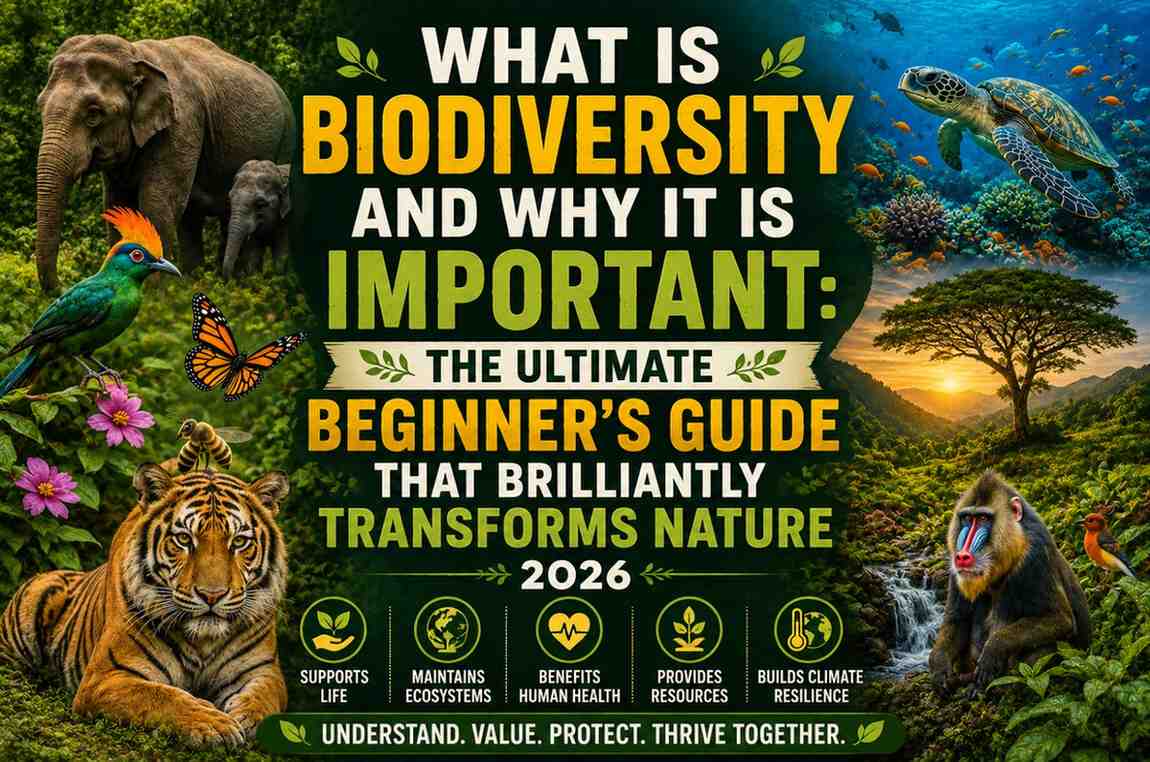
If you have ever walked through a forest and felt something vast and alive all around you, you have already sensed the answer to the question of what is biodiversity and why it is important.
Biodiversity is that feeling made measurable. It is the extraordinary richness of life—the millions of species, the diversity within species, and the complex webs of relationships between them—that makes our planet not merely habitable, but thriving.
What is biodiversity and why is it important? These two questions are inseparable, and the answers to both will permanently change how you see the natural world.
What Is Biodiversity? A Clear Definition
The term “biodiversity,” short for “biological diversity,” was popularized by the biologist E.O. Wilson in the 1980s. It describes three interconnected levels of biological variety.
Species diversity is the most familiar—the variety of different species living in a given area. A tropical rainforest might contain thousands of tree species, insects, birds, reptiles, and mammals in a single square kilometer. A monoculture wheat farm might contain only a handful.
Genetic diversity refers to the variation in genetic makeup within a species. High genetic diversity means a species can adapt to changing conditions, resist disease, and continue evolving. Low genetic diversity — as seen in severely bottlenecked populations — makes a species catastrophically vulnerable.
“Ecosystem diversity” refers to the variety of different habitats and ecological communities on Earth—coral reefs, wetlands, grasslands, old-growth forests, mangroves, alpine meadows, and everything in between.
Understanding what biodiversity is and why it is important means understanding all three levels and how they interact.
Why Is Biodiversity Important? The 6 Fundamental Reasons
1. Biodiversity Produces the Food We Eat
Agriculture depends on biodiversity at every level. Wild relatives of crop plants provide the genetic material that allows scientists to breed disease resistance, drought tolerance, and higher yields into our food crops. Without wild genetic diversity, our food security is built on sand.
Beyond genetics, healthy biodiversity in agricultural landscapes provides pest control, pollination, soil fertility, and water regulation — natural services that would cost trillions of dollars to replace with technology. Farmers and communities asking what biodiversity is and why it is important need only look at their harvest for the answer.
2. Biodiversity Keeps Our Water Clean and Plentiful
Wetlands, forests, and healthy riparian zones purify water. Biodiverse soils absorb and filter rainfall. Mangroves buffer coastlines and protect freshwater aquifers from saltwater intrusion.
When biodiversity collapses in a watershed, flooding increases, water tables drop, and water treatment costs skyrocket. Cities that protect their upstream forests and wetlands pay dramatically less for clean water than those that do not.
3. Biodiversity Regulates Our Climate
Forests are among the most powerful carbon sinks on Earth. Tropical forests store more carbon per hectare than any human technology. Biodiverse peatlands, seagrass meadows, and mangroves lock away carbon in their soils and biomass for centuries.
When we lose biodiversity, we lose carbon storage. When we lose carbon storage, we accelerate climate change. When we accelerate climate change, we lose more biodiversity. What is biodiversity and why is it important to climate policy? It is the foundation of every serious climate strategy. (See: How Does Climate Change Affect Biodiversity)
4. Biodiversity Is the Basis of Medicine
Over 50% of pharmaceutical drugs are derived from or inspired by natural compounds found in wild organisms. Aspirin from willow bark. Penicillin from bread mold. Taxol from the Pacific yew tree. Morphine from poppies. ACE inhibitors from Brazilian pit viper venom.
The medicines that already exist came from biodiversity we happened to discover in time. The ones we have not yet found may already be disappearing.
5. Biodiversity Supports Economies Worth Trillions
According to the World Wide Fund for Nature, more than half of global GDP — over 44 trillion dollars — is moderately or highly dependent on nature. Fisheries, forestry, agriculture, pharmaceuticals, tourism, and water management all rely on healthy, biodiverse ecosystems.
6. Biodiversity Has Intrinsic Value
Beyond every practical argument, biodiversity has value simply because it exists. Every species that has evolved over millions of years carries irreplaceable genetic information, plays a role in its ecosystem, and represents a unique form of life that Earth produced only once.
When people ask what is biodiversity and why is it important, the deepest answer is this: it is the product of 4 billion years of evolution, and its loss is permanent.
What Is Biodiversity in India? A Special Story
India exemplifies both the richness and the fragility of global biodiversity. With four of the world’s 36 recognized biodiversity hotspots—the Western Ghats, the Eastern Himalayas, the Sundaland region, and the Indo-Burma region—India is home to an extraordinary concentration of endemic species.
Understanding what biodiversity is and why it is important in the Indian context means recognizing that this diversity is not just a national asset. It is a global responsibility.
The Western Ghats alone have over 5,000 plant species, hundreds of bird species, and dozens of threatened mammals and amphibians found nowhere else on Earth. The Eastern Himalayas house species at every level of the mountain, from tropical forest tigers to alpine snow leopards. (See: Biodiversity Hotspots in India 2026)
What Is Threatening Biodiversity Right Now?
The five primary threats driving biodiversity loss globally are habitat destruction, climate change, overexploitation, pollution, and invasive species. In India, these are compounded by rapid urbanization, agricultural intensification, and infrastructure development in previously intact forests and wetlands.
Understanding what biodiversity is and why it is important naturally leads to the equally important question of why it is being lost—and what we can do to stop it. (See: Biodiversity Loss Causes and Effects 2026)
How Can Each of Us Protect Biodiversity?
The answer to what is biodiversity and why is it important carries an obligation. If biodiversity is the foundation of our food, water, health, and economy, then protecting it is not optional — it is existential.
At the individual level, choices like reducing pesticide use in gardens, supporting wildlife-friendly farming, eating less meat, buying sustainably certified products, and planting native species all make a cumulative difference. (See: How to Support Biodiversity in Your Home Garden)
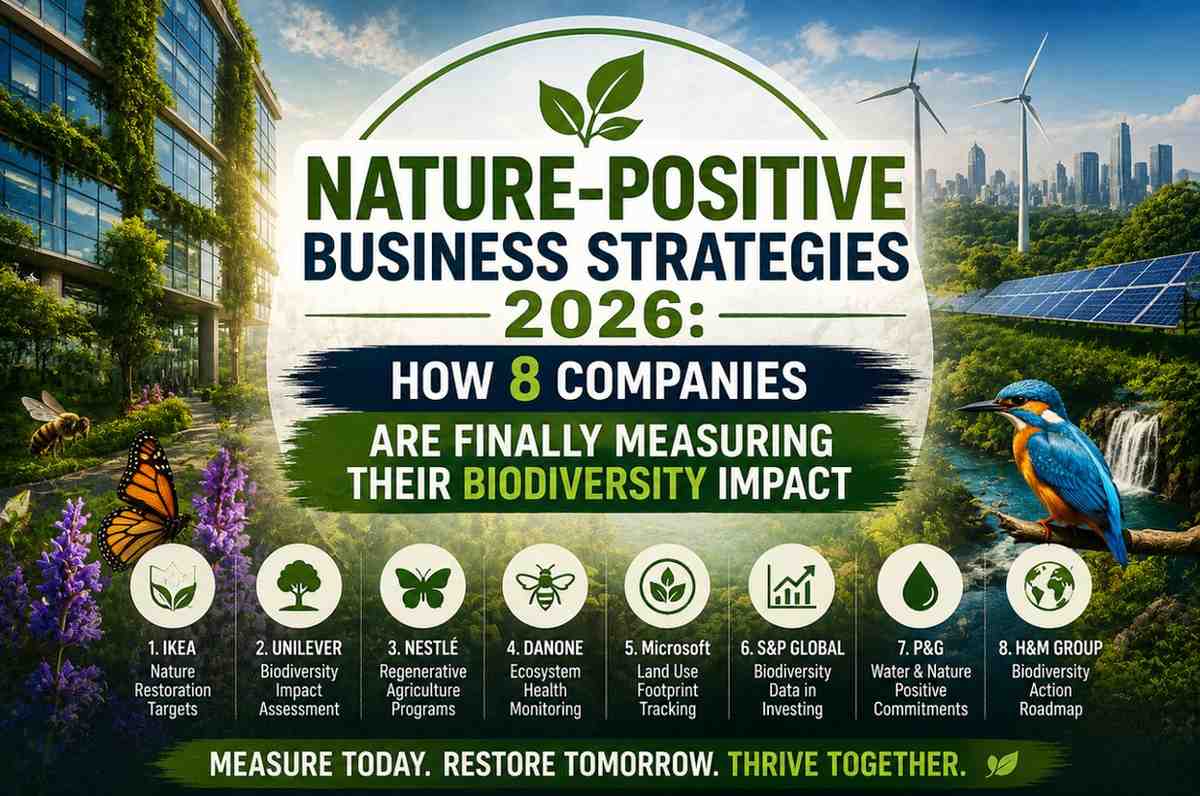
At the corporate level, new frameworks for measuring and disclosing biodiversity impact are creating accountability where none existed before. (See: Nature Positive Business Strategies 2026)
At the policy level, the Convention on Biological Diversity provides the international framework, and the COP17 meeting in Armenia in 2026 is the next crucial opportunity for enforceable global commitments. (See: COP17 Biodiversity Goals 2026 Armenia)
Conclusion: what is biodiversity and why it is important
What is biodiversity and why is it important? It is the living fabric of the planet—woven over 4 billion years, irreplaceable in any human lifetime, and under more pressure than at any point in recorded history.
Once you truly understand what biodiversity is and why it is important, you cannot walk through a forest, eat a meal, drink a glass of water, or take a medicine without understanding what biodiversity makes possible.
And once you understand what is at stake, the question of whether to act for biodiversity answers itself.
Last updated: May 2026 | Related: Biodiversity Loss Causes and Effects 2026 | Biodiversity Hotspots in India 2026


 creator@ecometric.site