Introduction
The biodiversity loss causes and effects 2026 presents to the world are no longer a future warning. They are a present-day emergency unfolding across every continent, ocean, and forest floor on Earth.
Scientists at the Intergovernmental Science-Policy Platform on Biodiversity and Ecosystem Services (IPBES) estimate that around one million species currently face extinction, many within decades. Understanding the biodiversity loss causes and effects 2026 brings into sharp relief is not just an academic exercise. It is a survival imperative for every living thing on this planet, including us.
This article breaks down exactly what is driving biodiversity loss, how the collapse of even one species can trigger catastrophic chain reactions, and what is at stake for humanity right now.
What Is Biodiversity Loss and Why Does 2026 Matter?
Biodiversity refers to the variety of life on Earth, from genes and species to entire ecosystems. Biodiversity loss describes the reduction of this variety through species extinction, habitat degradation, and the shrinking of genetic variation within wild populations.
2026 is a pivotal year because it falls within the Kunming-Montreal Global Biodiversity Framework implementation window. This landmark international agreement set binding 2030 targets for halting and reversing biodiversity loss. Progress so far has been uneven at best and alarmingly slow at worst.
When we examine the biodiversity loss causes and effects shaping 2026, we are not just counting extinct species. We are measuring the structural collapse of systems that produce our food, clean our water, and regulate our climate.
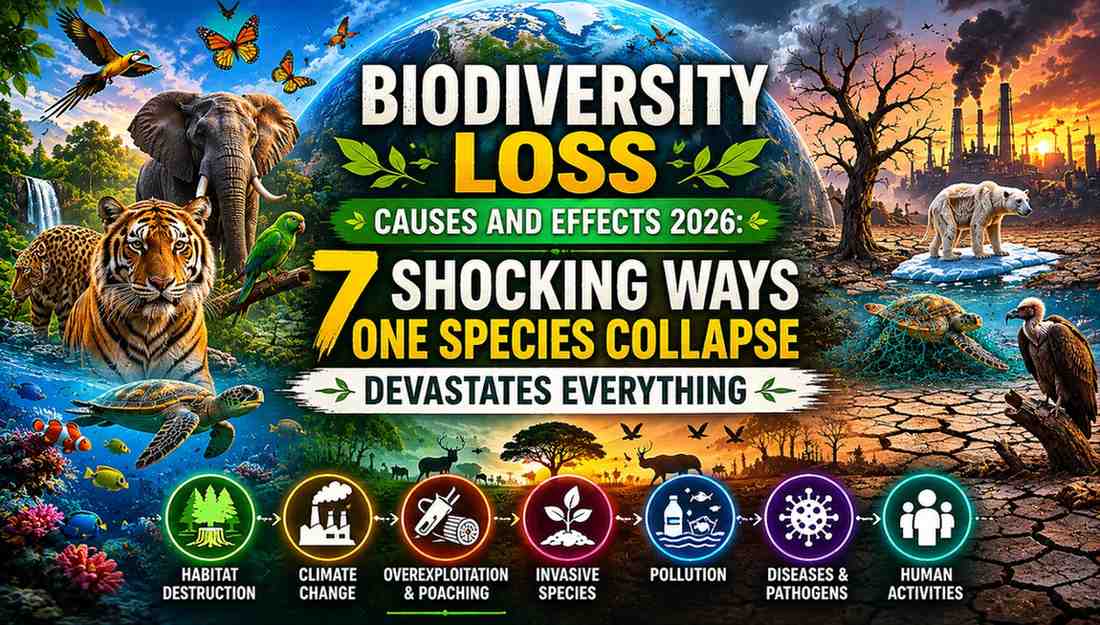
The 7 Most Devastating Causes of Biodiversity Loss in 2026
Cause 1: Habitat Destruction and Land-Use Change
The single largest driver behind biodiversity loss causes and effects in 2026 remains the conversion of natural habitats into farmland, urban areas, and industrial zones.
The Amazon loses roughly 10,000 square kilometers of forest every year. In India, mangroves, wetlands, and grasslands continue to be cleared for real estate and agriculture. When a forest becomes a field, hundreds of interdependent species lose their homes simultaneously.
Habitat destruction is not just loss of space. It is the severing of ecological relationships that evolved over millions of years and cannot be replicated by any human technology.
Cause 2: Climate Change
Climate change is amplifying every other driver of biodiversity loss. Rising temperatures are pushing species outside their thermal tolerance ranges, and disrupted seasonal cycles are wrecking reproduction and migration patterns worldwide.
According to NASA Climate, global average temperatures have already risen by approximately 1.2°C above pre-industrial levels. For cold-adapted species and narrow-range endemics, this margin is already lethal. (See: How Does Climate Change Affect Biodiversity)
Cause 3: Overexploitation and Poaching
Wildlife poaching, overfishing, and unsustainable hunting remain among the core biodiversity loss causes and effects that 2026 researchers flag repeatedly. The global illegal wildlife trade is valued at over $23 billion annually, the fourth-largest criminal enterprise on Earth.
When apex predators like tigers or sharks are removed, cascading effects ripple through entire food webs with devastating speed. (See: Most Endangered Species India 2026)
Cause 4: Pollution
Chemical runoff from agriculture introduces nitrates, phosphates, and pesticides into rivers and coastal waters, triggering algal blooms that deplete oxygen. An estimated 11 million metric tonnes of plastic enter the ocean each year, affecting marine organisms from zooplankton to blue whales.
This dimension of biodiversity loss causes and effects in 2026 is especially devastating because pollution crosses borders and affects ecosystems far from their sources.
Cause 5: Invasive Species
When species are introduced to environments where they did not evolve, they frequently outcompete native species with devastating effects. The Nile perch decimated hundreds of cichlid species in Lake Victoria. The Common Myna suppresses native birds across South and Southeast Asia. Invasive species represent a permanent alteration of ecosystem composition.
Cause 6: Disease
Emerging infectious diseases, accelerated by wildlife-human contact in degraded habitats, now threaten amphibians, bats, and bees. Chytrid fungus has driven dozens of frog species to extinction. Colony Collapse Disorder threatens pollination services worth an estimated $577 billion globally each year.
Cause 7: Agricultural Monocultures
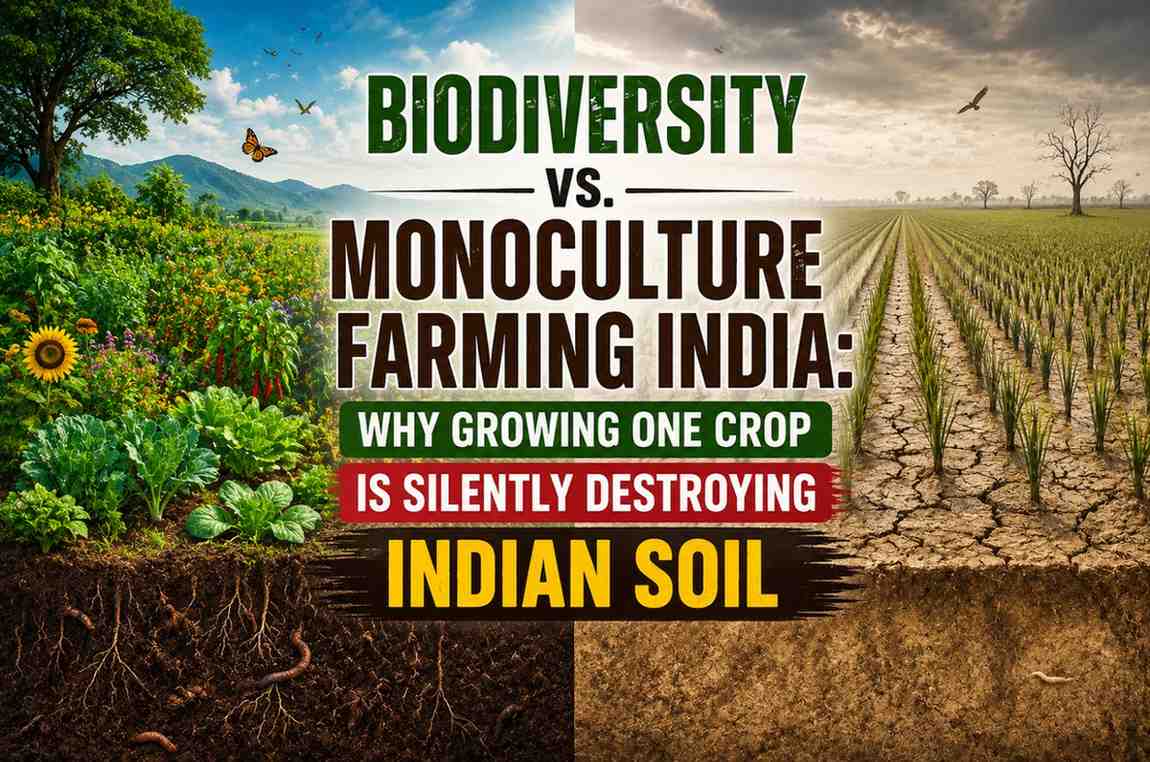
The replacement of diverse polyculture farming with single-crop systems is one of the most underappreciated biodiversity loss causes and effects in any 2026 policy debate. When a landscape grows only wheat or oil palm, soil biology collapses, pollinators vanish, and the system becomes dangerously fragile. (See: Biodiversity vs Monoculture Farming India)
The Domino Effect: How One Extinction Unravels an Ecosystem
This is perhaps the most alarming dimension of biodiversity loss causes and effects that 2026 science has clarified—the concept of trophic cascades.
When wolves were eliminated from Yellowstone in the 1920s, elk populations exploded. Elk over-grazed riverside vegetation, and rivers eroded their banks. Beaver populations crashed because willow, essential for their dams, had vanished. Fish populations declined as unshaded streams warmed. The removal of one predator fundamentally altered the hydrology of an entire national park.
When wolves were reintroduced in 1995, rivers changed course. Vegetation returned, beavers came back, and fish recovered. This is the power of biodiversity—and the full measure of what its loss destroys. Similar cascades have been documented when sharks are removed from coral reefs, when elephants are poached from savannas, and when otters vanish from kelp forests.
The Human Cost of Biodiversity Loss
Food security is at risk. An estimated 75% of global food crops depend on animal pollination. As bee populations decline, this essential service is under serious threat. Biodiversity loss causes and effects: a 2026 analysis consistently identifies food system collapse as a first-order global risk.
Water security deteriorates as biodiversity is lost. Forests, wetlands, and healthy soils absorb rainfall, filter groundwater, and regulate rivers. Their collapse means more flooding, less clean water, and higher treatment costs.
Medicine suffers too. Over 50% of pharmaceutical drugs are derived from or inspired by wild species. Every extinction is potentially the loss of an undiscovered cure. The biodiversity loss causes and effects we track in 2026 are silent losses to future human health.
Economic stability is threatened at scale. According to the World Wide Fund for Nature, more than half of global GDP is moderately or highly dependent on nature and its services. The World Economic Forum estimates biodiversity loss could cost the global economy up to $10 trillion by 2050.
Biodiversity Loss in India: An Urgent Case
India is one of the world’s 17 megadiverse countries, home to roughly 7–8% of all recorded species on just 2.4% of Earth’s land surface. The biodiversity loss causes and effects most visible in 2026 for India are concentrated in the Western Ghats, Eastern Himalayas, and the Indo-Burma hotspot.
India has made progress with Project Tiger and the National Mission for a Green India. But development continues to outrun conservation in many critical regions. (See: Biodiversity Hotspots in India 2026)
Solutions: What Must Happen Before It Is Too Late
Addressing biodiversity loss causes and effects in 2026 demands bold, cross-sector action.
Policy reforms must strengthen protected areas, enforce anti-poaching laws, and reform agricultural subsidies to reward nature-positive outcomes. The COP17 biodiversity goals in Armenia are the next major opportunity for binding international commitments. (See: COP17 Biodiversity Goals 2026 Armenia)
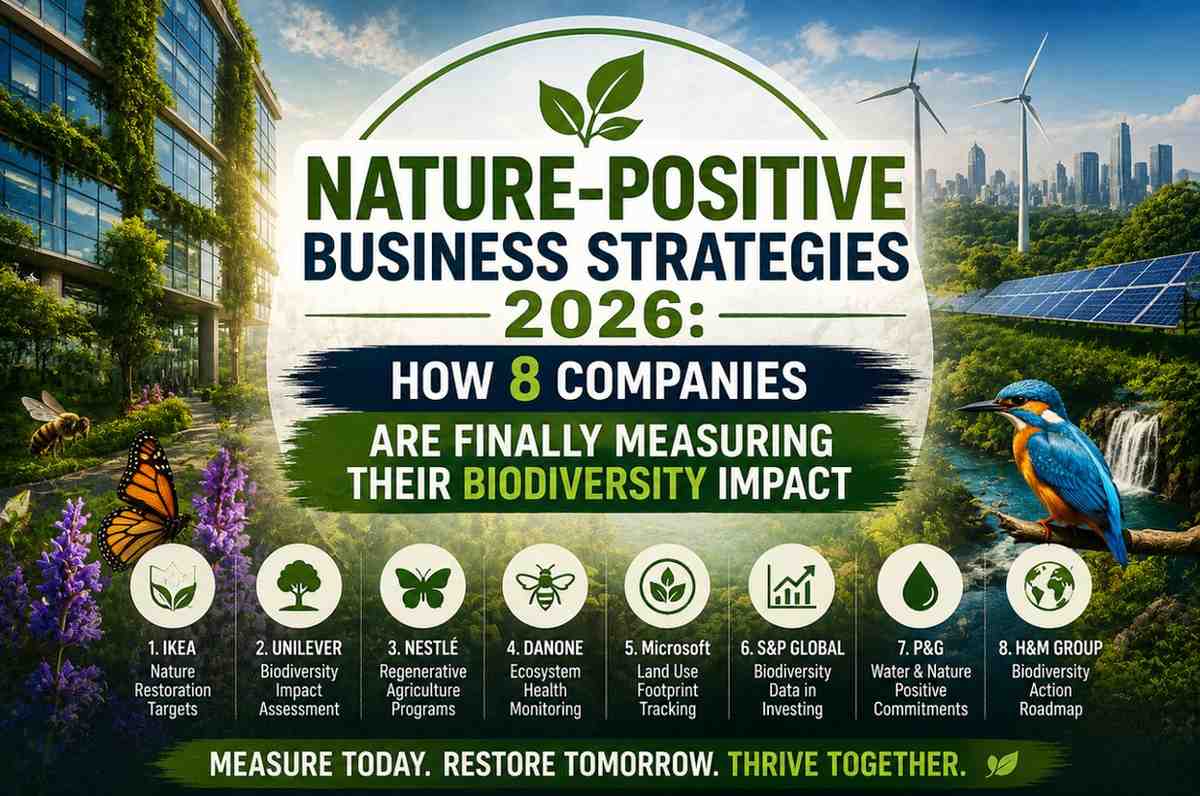
Corporate accountability is growing through frameworks like the Taskforce on Nature-related Financial Disclosures (TNFD). (See: Nature Positive Business Strategies 2026)
Individual action also matters enormously. (See: How to Support Biodiversity in Your Home Garden)
Conclusion: The Urgency Is Now
The biodiversity loss causes and effects in 2026 are not theoretical. They are reshaping ecosystems in real time. Every hectare of forest cleared, every river polluted, and every species lost reduces the resilience of the living systems that all human life depends upon.
Understanding biodiversity loss causes and effects is the first step. Acting on that understanding—with urgency, scale, and global cooperation—is the only way forward. The question science has already answered is whether things will get worse without action. The question 2026 is asking humanity is whether we are finally ready to act.
Last updated: May 2026 | Related: Most Endangered Species India 2026 | What Is Biodiversity and Why Is It Important


 creator@ecometric.site