Introduction
The green hydrogen energy future of 2026 is no longer a distant concept—it’s a rapidly developing global industry worth hundreds of billions of dollars. Governments from India to Germany to Australia are racing to establish green hydrogen leadership.
But what exactly is green hydrogen? How is it made? Why does everyone want it so badly?
This guide breaks down everything you need to know about the green hydrogen energy future in 2026—from the science to the economics to the global power race.
What Is Green Hydrogen?
Before exploring the green hydrogen energy future of 2026, let’s clarify the basics.
Hydrogen is the most abundant element in the universe, but on Earth, it doesn’t exist freely. It must be extracted from compounds like water or natural gas.
Green hydrogen is hydrogen produced by splitting water (H₂O) using renewable electricity through a process called electrolysis. The only byproduct is oxygen. Zero carbon emissions.
The Colour Code of Hydrogen
Not all hydrogen is equal:
| Type | Source | Emissions |
|---|---|---|
| Green Hydrogen | Renewable electricity + electrolysis | Zero |
| Blue Hydrogen | Natural gas + carbon capture | Low |
| Grey Hydrogen | Natural gas (no capture) | High |
| Brown/Black | Coal gasification | Very High |
The green hydrogen energy future of 2026 is specifically about the green variety—the only truly clean option.
How Green Hydrogen Is Made
The production of green hydrogen involves three key components:
- Renewable electricity source — solar, wind, or hydropower
- Electrolyser — a device that passes electrical current through water, splitting it into hydrogen (H₂) and oxygen (O₂)
- Storage and compression system—hydrogen is then compressed, liquefied, or converted to ammonia for transport
The efficiency of this process has improved dramatically. Modern electrolyzers convert 65–80% of electrical energy into stored hydrogen energy—making the green hydrogen energy future increasingly economically viable.
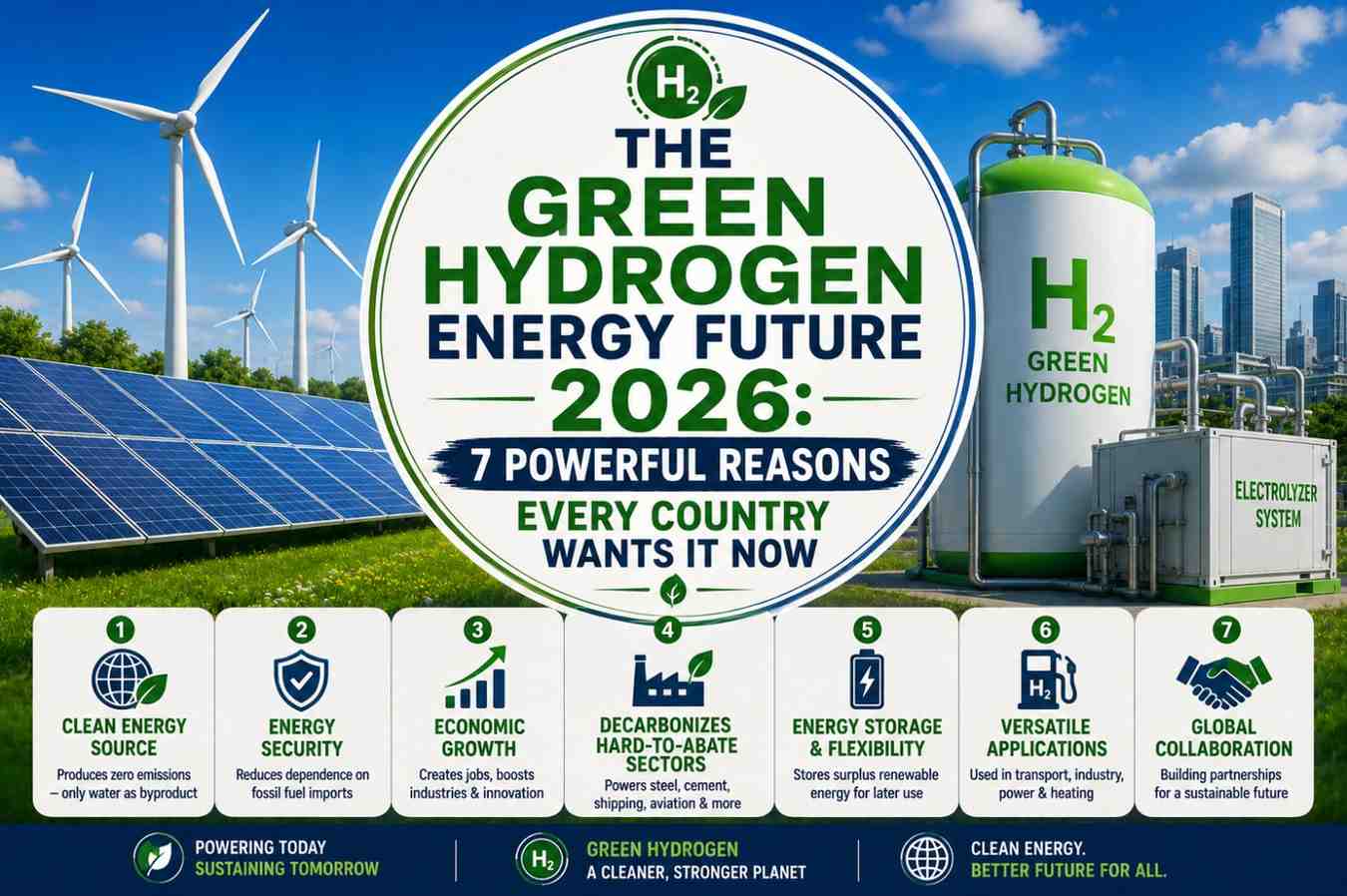
7 Powerful Reasons the Green Hydrogen Energy Future 2026 Is Happening Now
1. It Solves Long-Duration Energy Storage
Batteries are excellent for storing hours of energy. But seasonal energy storage — storing summer solar surplus for winter use — requires something else.
Green hydrogen can be stored for months and converted back to electricity via fuel cells when needed. This capability is critical to achieving 100% renewable electricity grids.
2. It Decarbonizes Hard-to-Abate Industries
Steel, cement, shipping, and aviation cannot easily electrify. Green hydrogen can:
- Replace coking coal in steel production
- Provide high-temperature industrial heat
- Power ships as ammonia fuel
- Potentially power long-haul aircraft
These sectors collectively account for ~30% of global CO₂ emissions. The green hydrogen energy future of 2026 is essential to reaching net zero.
3. Electrolyser Costs Have Crashed
In 2015, industrial electrolysers cost $1,000–$1,200 per kilowatt of capacity. By 2026, costs have fallen to $300–$500/kW — and they’re projected to reach $100–$200/kW by 2030.
This cost trajectory mirrors what happened with solar panels — and it’s transforming the economics of green hydrogen production.
4. Every Major Economy Is Investing
The green hydrogen energy future 2026 has triggered unprecedented global investment:
- India: National Green Hydrogen Mission targeting 5 million tonnes/year by 2030
- EU: €430 billion hydrogen investment plan
- USA: Inflation Reduction Act hydrogen production tax credits ($3/kg)
- Australia: World’s first green hydrogen export infrastructure
- Saudi Arabia: NEOM’s 650-tonne/day green hydrogen plant
This isn’t niche — it’s a mainstream global industrial transition.
5. India’s Green Hydrogen Opportunity
For India specifically, the green hydrogen energy future 2026 represents a unique strategic opportunity. India has:
- Abundant solar and wind resources
- Low labour costs for manufacturing electrolysers
- Large domestic demand from fertilizer and refinery sectors
- Government commitment via the National Green Hydrogen Mission
India has the potential to become a major green hydrogen producer and exporter — replacing coal and grey hydrogen across its industrial base.
6. Green Ammonia Opens Export Markets
Transporting hydrogen is difficult. Converting it to ammonia (NH₃) is much easier — ammonia is a liquid at relatively mild conditions and uses existing shipping infrastructure.
Green ammonia made from green hydrogen is emerging as a major traded commodity, with Japan and South Korea as eager importers. This creates a global export market for hydrogen-rich countries like India and Australia.
7. The Cost of Green Hydrogen Is Falling Fast
In 2022, green hydrogen cost approximately $4–$7/kg to produce. By 2026, costs in high-irradiation regions like India and the Middle East have fallen to $2.5–$4/kg. The target is $1/kg by 2030 — at which point it becomes competitive with grey hydrogen in most markets.
The trajectory of green hydrogen energy costs follows the same curve as solar panels — and we know how that story ended.
Challenges Facing the Green Hydrogen Energy Future 2026
An honest look at green hydrogen energy future in 2026 must acknowledge real challenges:
- Infrastructure gap — pipelines, terminals, and storage facilities require massive investment
- Energy loss in conversion — the hydrogen cycle is less efficient than direct electrification
- Water consumption — electrolysis requires significant water, a constraint in arid regions
- Technology scaling — electrolyser manufacturing must scale enormously
- Cost still too high for many applications vs. direct renewables
These are real obstacles — but they’re engineering and investment challenges, not fundamental physical limitations.
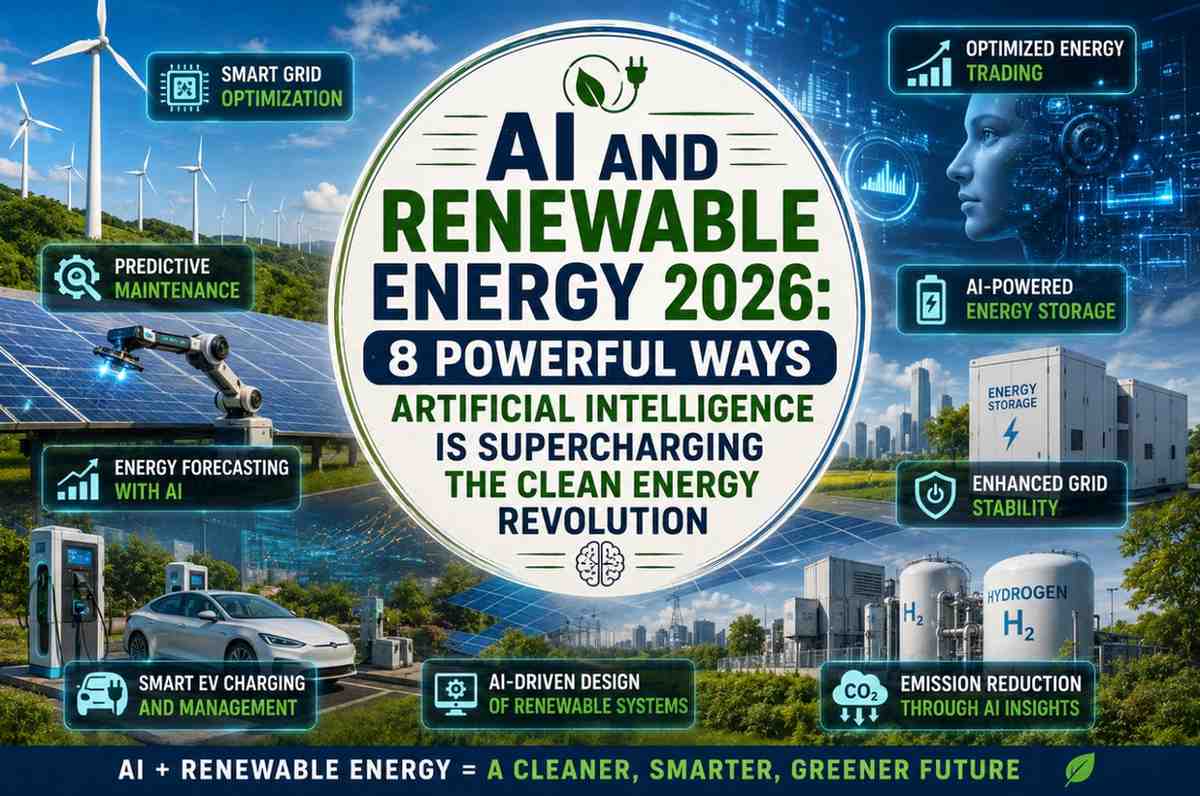
Related Article: AI and Renewable Energy 2026 — How AI Is Supercharging Clean Energy
External Resources
FAQ: Green Hydrogen Energy Future 2026
Q1: What makes hydrogen “green” in 2026? Green hydrogen is produced using renewable electricity to split water via electrolysis — producing zero carbon emissions.
Q2: How much does green hydrogen cost to produce in 2026? Production costs in high-solar regions have fallen to $2.50–$4.00/kg in 2026, down significantly from $5–$7/kg in 2022.
Q3: What industries need green hydrogen the most? Steel production, cement, shipping, aviation, and fertilizer manufacturing are the primary industries driving demand in the green hydrogen energy future 2026.
Q4: What is India’s green hydrogen target? India’s National Green Hydrogen Mission targets 5 million tonnes of green hydrogen production per year by 2030.
Q5: Is green hydrogen better than batteries for energy storage? Green hydrogen excels at long-duration and seasonal storage — something batteries cannot yet do economically at scale.
Conclusion
The green hydrogen energy future 2026 is not a promise — it’s an unfolding reality. Plummeting electrolyser costs, massive government investment, and the urgent need to decarbonize heavy industry are converging to make green hydrogen one of the most important energy technologies of this decade.
For India especially, the opportunity is enormous. Becoming a global green hydrogen leader could transform the nation’s energy security, industrial competitiveness, and export economy.
The future is green — and hydrogen is a critical part of how we get there.



 creator@ecometric.site