Introduction
Learning how to reduce plastic pollution at home is one of the most impactful environmental actions any individual can take. India generates over 3.5 million tonnes of plastic waste every year—and a significant portion comes directly from household consumption.
The good news: knowing how to reduce plastic pollution at home doesn’t require a lifestyle overhaul. It starts with small, practical swaps that save money, protect your family’s health, and dramatically cut your plastic footprint.
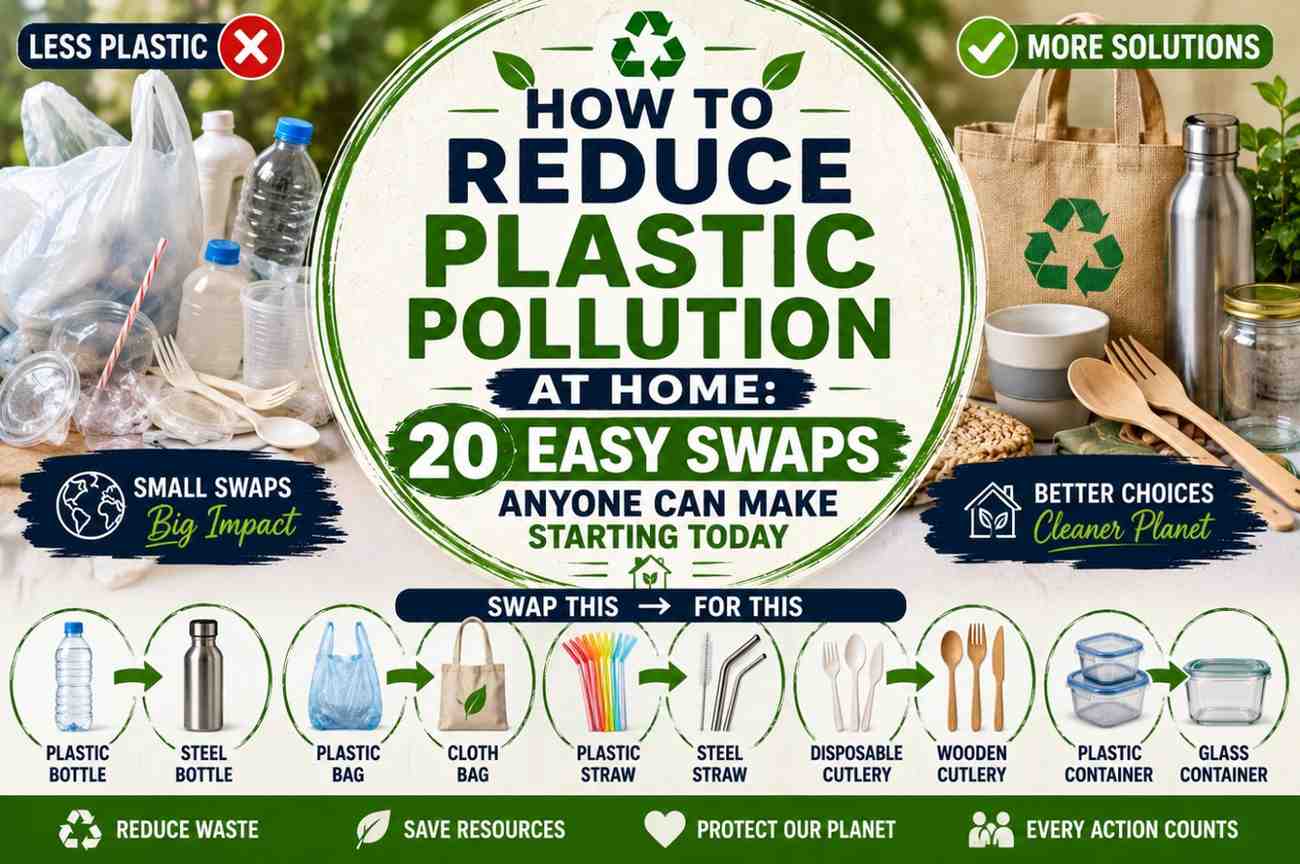
Here are 20 easy swaps you can start today.
Why Learning How to Reduce Plastic Pollution at Home Matters
Single-use plastics don’t disappear after the bin. They break into microplastics that contaminate rivers, soil, and food chains — eventually entering your own body.
Studies have found microplastics in human blood, breast milk, and lung tissue. Understanding how to reduce plastic pollution at home is no longer just an environmental concern. It’s a personal health issue.
India’s Plastic Waste Management Rules 2022 banned single-use plastic items — but enforcement depends on public participation.
Kitchen Swaps: How to Reduce Plastic Pollution at Home While Cooking
The kitchen is where most household plastic enters the home. These swaps address the biggest sources.
Swap 1 — Replace Plastic Bags With Cloth or Jute Bags
The humble plastic carry bag is India’s most visible plastic waste item. Switching to cloth bags (thela bags), jute bags, or reusable cotton tote bags completely eliminates this waste stream.
One cloth bag used for 5 years replaces over 500 plastic bags. At ₹50–150 per bag, it’s also far cheaper long-term.
Swap 2 — Use Steel or Glass Containers Instead of Plastic Boxes
Plastic food containers leach chemicals — particularly BPA and phthalates — when heated. Switching to stainless steel dabbas or glass containers eliminates this health risk while lasting decades.
Steel tiffin boxes are a traditional Indian staple — they never needed replacing with plastic in the first place.
Swap 3 — Switch From Plastic Wrap to Beeswax Wraps or Steel Lids
Plastic cling wrap is used once and discarded. Beeswax wraps (now available from Indian brands) are washable and reusable for over a year. Steel lids and silicone covers work just as well for bowls.
Swap 4 — Buy Loose Spices and Grains From Local Shops
Packaged spices, pulses, and grains come in plastic pouches. Buying from local kirana stores with your own steel containers or cloth bags eliminates this packaging entirely.
Most kirana stores are happy to accommodate — it’s how shopping worked before plastic packaging arrived.
Swap 5 — Replace Plastic Bottles With Copper or Steel Water Bottles
Plastic water bottles are among the most littered items in India. A quality stainless steel or copper water bottle lasts 10+ years, is safer for health, and completely eliminates disposable bottle waste.
Related Article: Zero Waste Lifestyle Tips for Beginners India
Bathroom Swaps: How to Reduce Plastic Pollution at Home Daily
The bathroom generates more plastic waste per square foot than any other room.
Swap 6 — Use Bar Soap Instead of Liquid Soap in Plastic Bottles
Bar soaps come in paper or no packaging. They last longer per gram than liquid soap and produce zero plastic waste. Traditional Indian soaps like neem and turmeric bars are widely available.
Swap 7 — Switch to Bamboo or Neem Toothbrushes
Plastic toothbrushes take 400+ years to decompose. Bamboo toothbrushes with nylon bristles are biodegradable, widely available in India, and cost similarly to plastic alternatives.
Swap 8 — Replace Shampoo Bottles With Shampoo Bars
Shampoo bars come in paper packaging or no packaging. One bar typically equals 2–3 plastic bottles of liquid shampoo. Indian brands like Khadi and numerous natural cosmetic makers offer excellent options.
Swap 9 — Use a Safety Razor Instead of Disposable Razors
A single stainless steel safety razor with replaceable blades eliminates hundreds of disposable plastic razors. The razor itself lasts a lifetime. Blades are sold in paper packaging and cost a fraction of cartridge razor prices.
Swap 10 — Replace Plastic Cotton Buds With Paper or Bamboo Stem Alternatives
Plastic cotton buds are banned in India — yet still widely available. Paper or bamboo stem alternatives are available from pharmacies and eco-brands, are equally effective, and are fully biodegradable.
Shopping and Storage Swaps
Swap 11 — Carry Your Own Container to Street Food Stalls
Street food plastic waste — cups, plates, spoons — is enormous. Carrying your own steel plate and cup to favourite stalls eliminates this stream entirely. Many vendors appreciate the gesture.
Swap 12 — Choose Glass Bottled or Tetra Pack Beverages Over Plastic Bottles
When buying packaged beverages, glass bottles (returnable where possible) and tetra packs have significantly lower plastic impact than PET bottles. The milk pouch problem — a massive plastic source — can be addressed by opting for glass bottle home delivery services now available in many Indian cities.
Swap 13 — Use Newspaper or Old Cloth for Wrapping Gifts
Decorative plastic wrapping is purely disposable. Newspaper wrapping with string, fabric wrapping (furoshiki-style), or reusable boxes eliminate gift wrapping plastic entirely.
Swap 14 — Choose Loose Produce Over Packaged Produce
Supermarkets increasingly sell fruits and vegetables pre-packaged in plastic trays with cling wrap. Choosing loose produce from the sabzi mandi or traditional market section eliminates this packaging.
Cleaning and Household Swaps
Swap 15 — Use Coconut Shell or Loofah Scrubbers Instead of Plastic Scourers
Plastic kitchen scrubbers shed microplastics with every use — directly into your food and water. Coconut shell scrubbers, loofah gourds (grown easily in Indian gardens), and natural fiber scrubbers are equally effective and fully biodegradable.
Swap 16 — Make DIY Cleaning Solutions in Reusable Spray Bottles
Most household cleaners are diluted concentrates sold in plastic bottles. A spray bottle filled with diluted white vinegar, citric acid solution, or diluted dish soap handles most cleaning tasks. Refill concentrates sold in larger bottles reduce plastic per use dramatically.
For environmental tips and India-specific sustainability resources, see Centre for Science and Environment India and Plastic Free India Foundation.
Swap 17 — Use Cloth Rags Instead of Plastic-Wrapped Paper Towels
Old cotton clothes, dhotis, and sarees make excellent cleaning rags. Cutting up old clothing creates a lifetime supply of reusable rags — eliminating both the plastic packaging of paper towels and the disposable tissue waste itself.
Children and Lifestyle Swaps
Swap 18 — Choose Wooden, Metal or Cloth Toys Over Plastic Toys
Children’s toys are among the most plastic-intensive product categories. Wooden toys (especially locally made ones), cloth dolls, and metal construction toys are more durable, safer, and plastic-free.
Swap 19 — Use Cloth Diapers or Hybrid Systems
Disposable diapers are one of the most polluting single-use plastics — both for plastic content and volume. Traditional Indian cloth nappies (langots) or modern fitted cloth diapers with covers eliminate disposable diaper plastic for the birth-to-potty period.
Swap 20 — Organize a Neighbourhood Swap Meet
The most powerful how to reduce plastic pollution at home action is collective. Organizing a neighbourhood swap meet for clothes, books, kitchen items, and children’s products eliminates the need for new plastic-packaged purchases for dozens of households simultaneously.
Related Article: Ocean Plastic Pollution Solutions 2026
5 Short FAQs
Q1: How to reduce plastic pollution at home with a limited budget? Start with free swaps: use cloth bags you already own, buy loose from kirana stores, use old cotton clothes as rags. Most plastic-free alternatives are cheaper long-term than disposables — you save money, not spend more.
Q2: Which rooms in the home generate the most plastic waste? The kitchen and bathroom together account for 70–80% of household plastic waste. Focusing swaps on these two rooms produces the fastest, most significant reduction in your plastic footprint.
Q3: Is plastic-free living realistic in India? Fully plastic-free is difficult given current packaging norms. But reducing by 60–80% is highly achievable with the swaps in this article. Focus on eliminating single-use plastics first — the highest-impact category.
Q4: What can I do with existing plastic items I already own? Use them until they wear out, then replace them with sustainable alternatives. Disposing of still-functional plastic items and buying new sustainable ones creates unnecessary waste and manufacturing impact.
Q5: How do I motivate my family to join plastic-free efforts? Start with the swaps that benefit them directly — better tasting food from metal containers, cost savings from cloth bags, health benefits of non-plastic cookware. Frame it as smarter living, not sacrifice.
Conclusion
Knowing how to reduce plastic pollution at home is the first step. Taking action is the second. With these 20 swaps — many of which return India to traditional practices that worked perfectly before single-use plastic arrived — you can cut your household plastic waste by 70–80%.
It starts with one swap. Then another. Then your household becomes a model for your neighbours.
Start today. Pick three swaps from this list, implement them this week, and build from there. Your home, your health, and India’s environment will thank you.


 creator@ecometric.site